Understanding the Technology Behind New Zealand's Critical Communications
Most people have used radio in some form without giving much thought to the technology behind it. However, out of the various uses for radio, Land Mobile Radio (LMR) remains one of the most important communication systems operating across New Zealand.
From emergency services to airports, public transport, forestry, construction and local government, thousands of people rely on LMR every day. It allows teams to communicate instantly, coordinate operations and respond quickly when timing matters.
Unlike commercial broadcast radio, which sends information from one transmitter to many listeners, Land Mobile Radio is designed for two-way communications between people working in the field. Using Push-to-Talk (PTT), users can instantly communicate with an individual or an entire workgroup at the press of a button. These systems can be as simple as a small network covering a single worksite or as complex as a nationwide digital radio network supporting thousands of users.
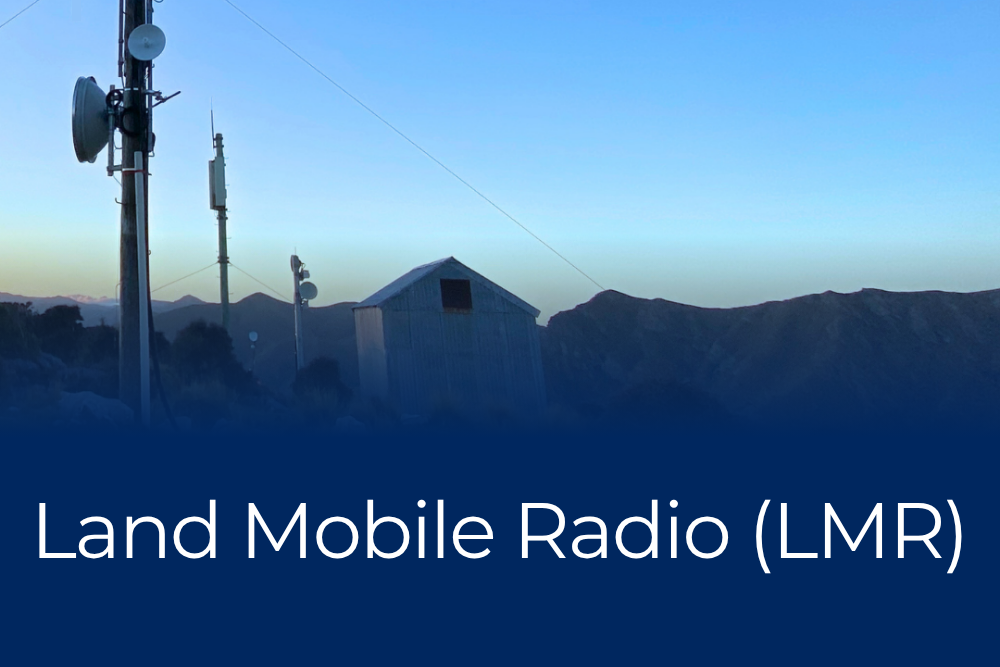
At its core, an LMR system is made up of much more than handheld radios (portables), or radios installed within vehicles (mobiles). It includes base stations, repeaters, antennas, and the licensing that allows those systems to operate. Each part plays a role in ensuring communications remain reliable across the area the network has been designed to serve.
This is where LMR differs from many other forms of communication. Rather than relying on a public cellular network, organisations can operate dedicated radio networks that are designed around their own operational requirements. When properly designed and maintained, these networks can provide high levels of coverage, reliability and resilience, while enabling instant group communications that are often essential for operational teams. Because organisations control their own radio infrastructure, those systems can also continue operating when public mobile networks become congested during major incidents or emergencies.
One of the simplest ways to understand the difference between LMR and mobile phones is to compare some of the biggest differences on how they can be used:
Mobile Phone | Land Mobile Radio (LMR) |
Individual calls | Instant group calls |
Public network | Private network |
Dial numbers | Push-to-talk |
Possible congestion | Designed for operational communications |
Consumer devices | Rugged industrial devices |
This table is not exhaustive, and many LMR networks can be configured to have other features, such as number dialling to call an individual unit, and be used by multiple different companies all using separate talk groups for individual private and group conversations.
New Zealand presents its own challenges for radio communications. Mountainous terrain, remote worksites and geographically dispersed infrastructure all influence how radio networks are designed. Delivering reliable coverage takes careful planning, specialised equipment and an understanding of how radio signals behave in different environments.
Modern LMR systems can support digital voice, GPS location services, messaging, encryption and interoperability between organisations. While the technology continues to develop, the purpose remains the same: providing dependable communications when organisations need them most.
For people new to the industry, it is easy to assume that Land Mobile Radio is simply about the radios themselves. In reality, the radios are only one part of a much larger system. Designing, installing and maintaining an effective LMR network requires an understanding of radio frequency principles, antenna systems, infrastructure, coverage, interference, licensing and ongoing maintenance. Every element contributes to how well the system performs.
That is why a basic understanding of LMR is valuable, even if you are not a radio engineer. Many people work alongside these systems every day without being responsible for designing or maintaining them. Knowing how the different parts of an LMR system fit together makes it easier to work with technical teams, make informed decisions and better understand the industry as a whole.
Supporting that understanding is an important part of what RFUANZ does. Alongside industry advocacy and collaboration, RFUANZ is committed to strengthening knowledge across New Zealand’s radio communications sector through training, professional development and opportunities to share expertise.
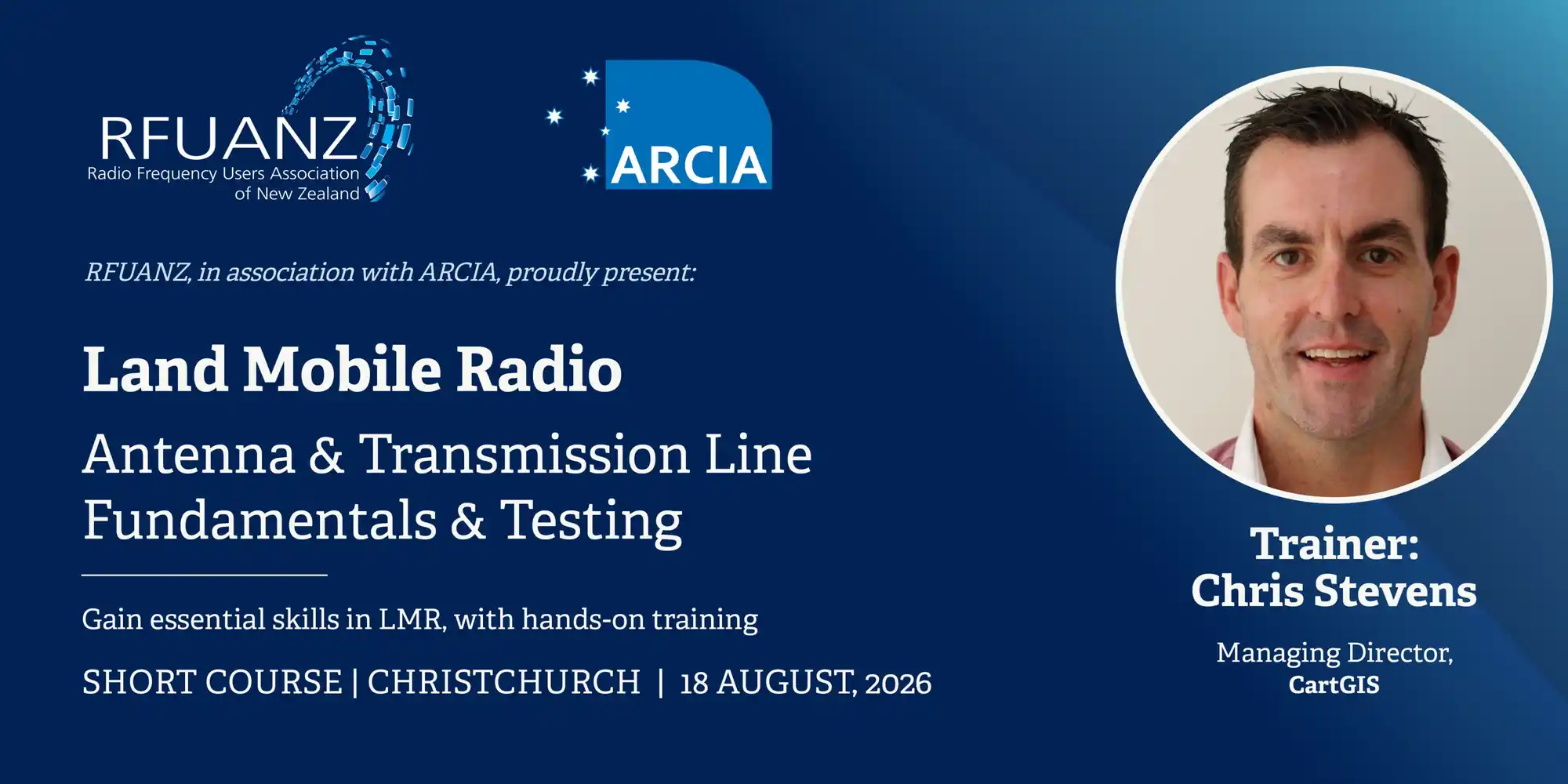
This August, RFUANZ is partnering with ARCIA to deliver a Land Mobile Radio training course in New Zealand. Designed for people who are new to LMR, as well as those wanting to strengthen their existing knowledge, the course provides a practical introduction to Land Mobile Radio and the technologies that support it. Participants will gain theoretical and practical understanding of the fundamentals, antennas, transmission systems, infrastructure, interference and industry best practice, helping build confidence in an area that can often seem highly technical.
Land Mobile Radio continues to support many of the essential services New Zealand relies on every day. As technology evolves and demand for reliable communications grows, building industry knowledge becomes increasingly important. Whether you are starting your career, moving into the radio communications sector or simply wanting to better understand the technology behind these critical networks, developing a solid foundation in LMR is an investment in both your own capability and the future of the industry.
For more information on Land Mobile Radio licensing visit the Radio Spectrum Management website